About pressat
Google Analytics allows you to see where your visitors are coming from and what they do on your website. In other words, it helps you track your traffic sources as well as user engagement on your website.
For eCommerce platforms, Google Analytics offers an enhanced eCommerce tracking feature. This allows you to better understand users’ shopping and checkout behavior. Plus, you can see which products perform the best and track your WooCommerce store’s sales performance.
By default, a WooCommerce store allows your customers to create an account or checkout as guest users. Creating an account helps the user save their shipping and billing information for faster checkout next time. It also helps you offer customers a personalized shopping experience based on their browsing and shopping history.
Wouldn’t it be great if you could track logged-in users with their user IDs in Google Analytics and also see the path customers took before making a purchase?
This will give you access to a treasure trove of information and insights on customer behavior. You can use it to offer a better on-site experience and boost your sales.
Let’s take a look at how to easily enable customer tracking in WooCommerce. Here are quick links that you can use to jump ahead to any section:
- Set up Ecommerce Tracking in WordPress with Google Analytics
- Enabling User Journey Addon in MonsterInsights
- Enabling User ID Tracking in Google Analytics
- Viewing Customer Tracking Reports in Google Analytics
- Matching Customer Tracking with Their WordPress Accounts
Set up Ecommerce Tracking in WordPress with Google Analytics
The best way to set up WooCommerce customer tracking in Google Analytics is using Monsterinsights. It is the best Analytics solution for WordPress and helps you set up tracking without editing code.
The plugin offers an eCommerce addon, which automatically detects WooCommerces and starts tracking customer behavior in Google Analytics. It also comes with a Customer Journey addon that allows you to see users’ behavior before they make a purchase.
First, you will need to install and activate the MonsterInsights plugin. For more details, see our step-by-step guide on how to install a WordPress plugin.
You will need to be on the ‘Pro’ plan to access the eCommerce and User Journey addon, which we will use for this tutorial. However, there is also a MonsterInsights Lite version you can use for free.
Upon activation, you will see the welcome screen and the setup wizard. Simply click the ‘Launch the Wizard’ button and follow the on-screen instructions.
 cdn3.wpbeginner.com/wp-content/uploads/2009/08/launch-setup-wizard-300x170.png 300w" data-ll-status="loaded" style="box-sizing: inherit; border-style: none; display: block; max-width: 100%; height: auto;" data-image="ef8licvifhqw">
For detailed instructions, see our article on how to install Google Analytics in WordPress.
MonsterInsights also helps you set up Google Analytics 4 (GA4) property through its Dual Tracking feature. GA4 is the latest Analytics version, and it will soon replace Universal Analytics.
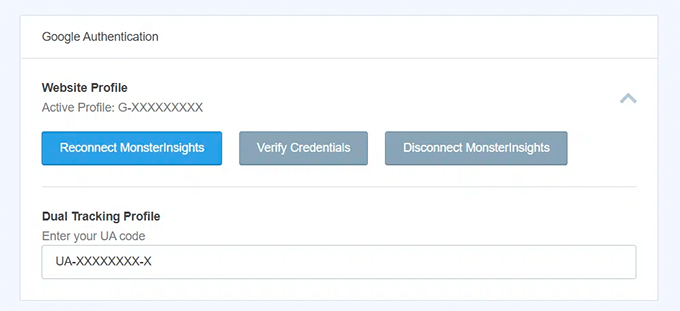 cdn3.wpbeginner.com/wp-content/uploads/2021/12/monsterinsights-dual-tracking-gav4-300x137.png 300w" data-ll-status="loaded" style="box-sizing: inherit; border-style: none; display: block; max-width: 100%; height: auto;" data-image="8e2b34iwuhs6">
If you haven’t created a Google Analytics 4 property, then now is the best time. That’s because, after July 1, 2023, Universal Analytics will sunset and won’t track your website data. Setting up GA4 after the sunset date will mean you’ll have to start from scratch and won’t have any historical data for comparison.
For more details, please see our guide on how to switch to Google Analytics 4 in WordPress.